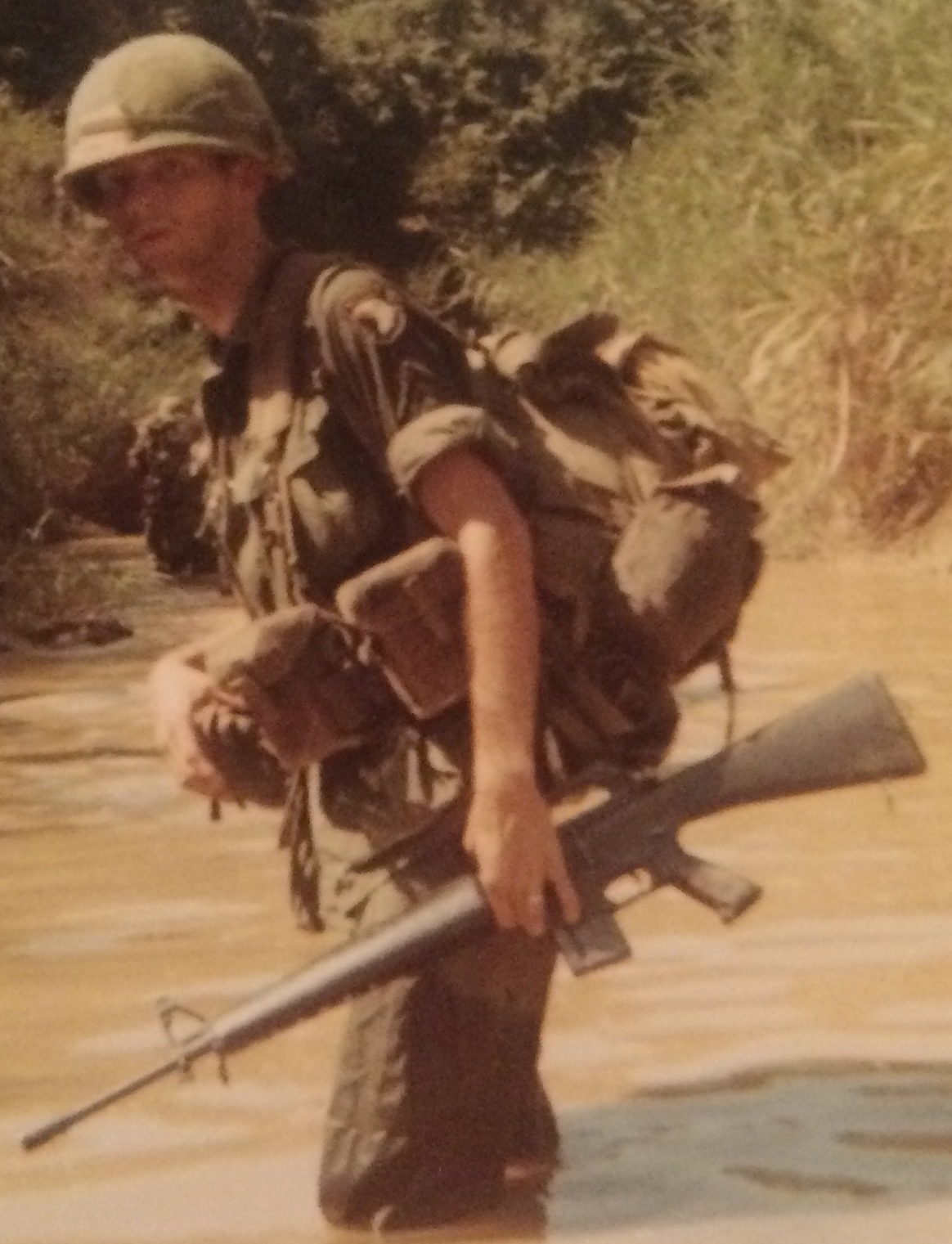
 Sgt. Clifton "Corky" Cathcart.
 Combat mission Vietnam 1968.
The M16-A1 weapons system.
Sgt. Clifton "Corky" Cathcart. 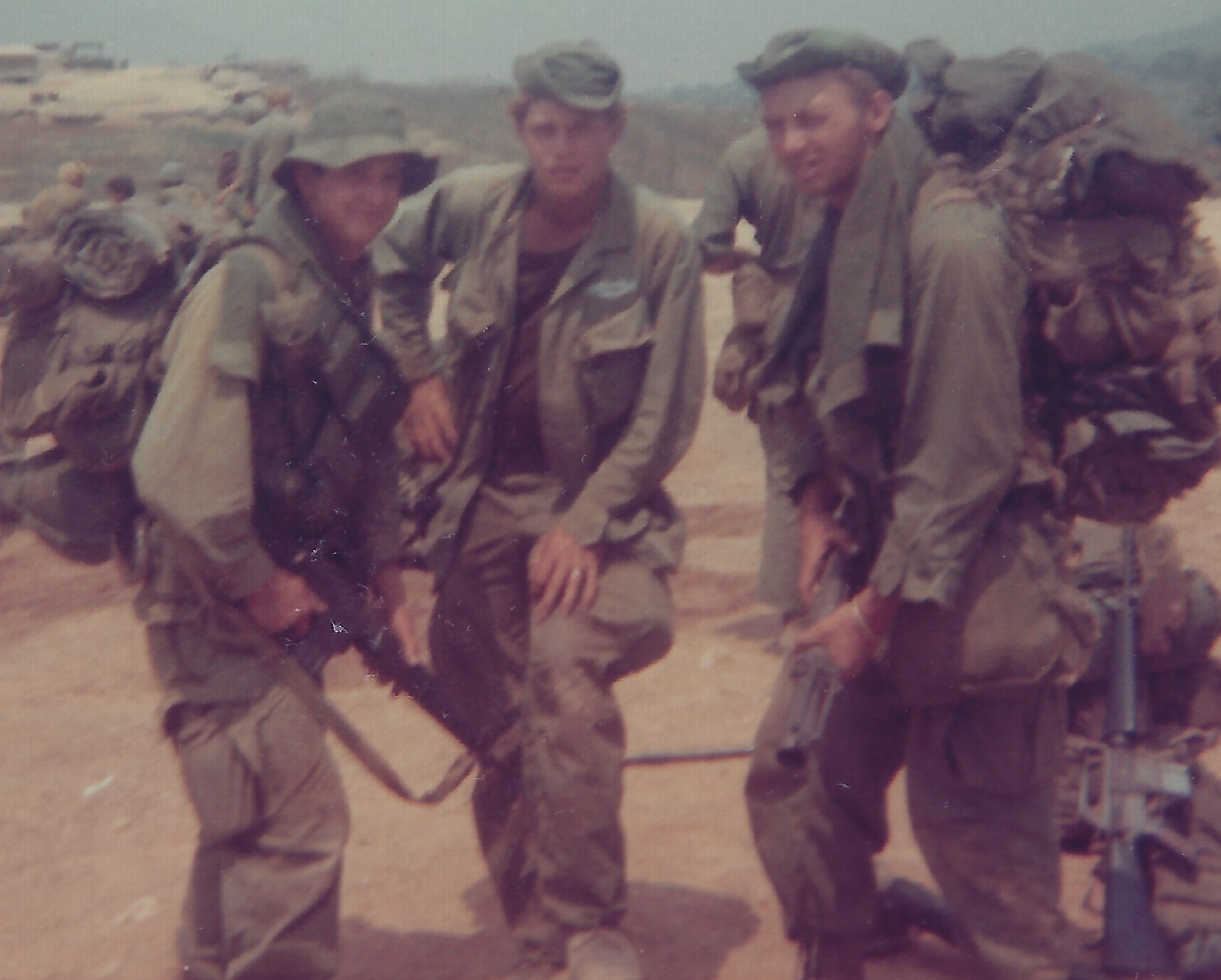 Diz, Wayne Bratz [KIA], Jim Spearman
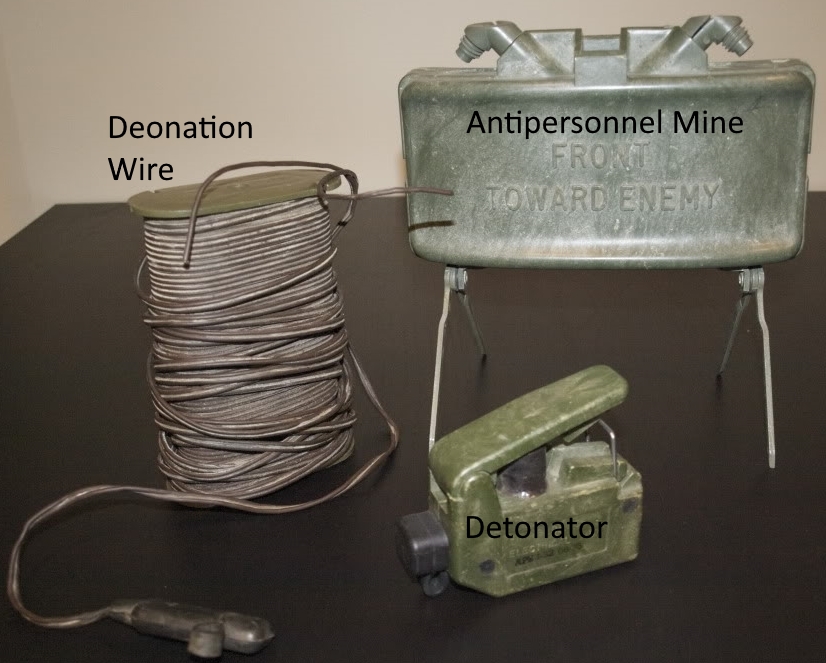 It's plastic case contains a nearly 1 inch thick slab of C4 plastic explosive, covered with a layer of 700 roughly 1/8 inch diameter ball bearing like pellets on the "front" side of the layer of plastic explosive. The Claymore is a directional, command detonated, anti-personnel mine. The soldier simply points the device toward the enemy, moves away from behind it, and detonates it... What the military had learned from the research and development of the Claymore largely impacted the 5.56 weapons system development; because, well, they really had the same problem. The Claymore designers discovered that, even using those tiny 1/8 inch diameter pellets, if they could get their velocity up to about 4000 feet per second (fps), the tiny pellets became a formidable weapon. Increasing velocity of a projectile, of course, increases energy to be transferred to target. Nearing 4000 fps, however, they learned the method of transfer becomes different. Nearing 4000 fps, the projectile nearly explodes (fragments) on impact with the target, even with soft tissue, thus transferring most all the energy to that point of contact. Having knowledge of what the military had learned from the claymore development, then, Stoner applied it to the M16-A1.]